
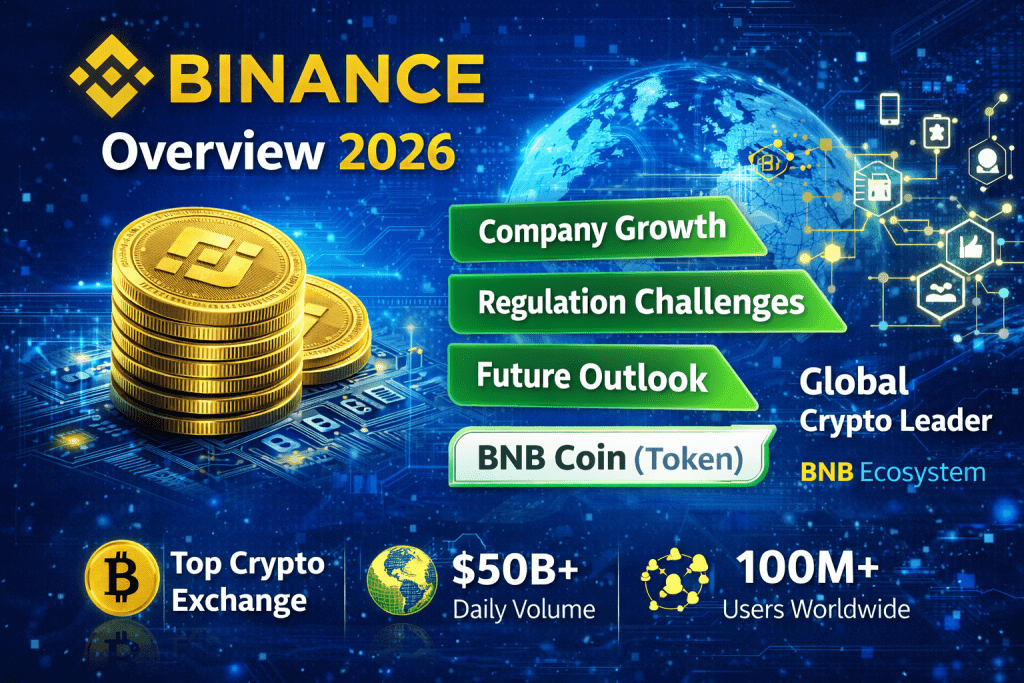
Binance is the world’s largest cryptocurrency exchange by trading volume. Since its launch in 2017, Binance has grown from a small crypto startup into a global financial technology powerhouse serving millions of users worldwide.
In 2026, Binance remains one of the most influential companies in the digital asset industry, despite facing regulatory challenges in several countries.
This article covers:
• What Binance is
• How it makes money
• Growth and expansion
• Regulatory situation
• Binance Coin (BNB) role
• Future outlook
🏢 What Is Binance?
Binance is a cryptocurrency exchange platform that allows users to:
- Buy and sell cryptocurrencies
- Trade spot and futures markets
- Earn staking rewards
- Use crypto savings products
- Access Web3 tools and wallets
It supports hundreds of cryptocurrencies, including Bitcoin, Ethereum, and many altcoins.
The company was founded by Changpeng Zhao (CZ) and quickly became dominant due to low trading fees and strong technology infrastructure.
💼 How Binance Makes Money
Binance generates revenue mainly through:
1️⃣ Trading Fees
Users pay small fees when buying or selling crypto. High trading volume makes this the largest revenue source.
2️⃣ Futures & Derivatives
Binance offers leveraged trading and futures contracts, which generate additional fees.
3️⃣ Staking & Earn Products
Users lock their crypto assets to earn rewards, and Binance earns a portion of those returns.
4️⃣ Binance Smart Chain (BNB Chain)
The ecosystem generates revenue through transaction activity and decentralized applications.
📈 Growth & Market Position
Binance consistently ranks as the top crypto exchange in global trading volume.
Key growth drivers include:
• Expansion into new markets
• Institutional crypto adoption
• Web3 integration
• Strong liquidity
• Competitive fees
Even during market downturns, Binance maintained strong user activity compared to many competitors.
🪙 Binance Coin (BNB)
BNB is the native token of the Binance ecosystem.
BNB is used for:
- Trading fee discounts
- Transaction fees on BNB Chain
- Token launches
- DeFi applications
Binance regularly burns BNB tokens, reducing supply and potentially supporting long-term value.
BNB remains one of the top cryptocurrencies by market capitalization.
⚖️ Regulatory Challenges
Binance has faced regulatory scrutiny in several regions, including the US and Europe.
Challenges include:
• Compliance with financial regulations
• Licensing requirements
• Anti-money laundering enforcement
• Government investigations
Despite this, Binance has worked to strengthen compliance programs and expand regulatory cooperation globally.
🚀 Future Outlook for Binance
Looking ahead to 2026 and beyond:
• Crypto adoption continues globally
• Institutional investors are entering the market
• Web3 and decentralized finance are expanding
• Blockchain innovation remains strong
Binance aims to:
- Improve transparency
- Strengthen compliance
- Expand global partnerships
- Develop new financial products
The long-term success of Binance depends on both crypto market growth and regulatory stability.
📌 Final Summary
Binance remains the largest cryptocurrency exchange in the world by trading volume. It generates revenue through trading fees, derivatives, staking, and its blockchain ecosystem.
Despite regulatory pressures, Binance continues to play a major role in global crypto infrastructure. Its native token BNB supports the platform’s ecosystem and adds long-term value potential.
Binance’s future will depend on:
✔ Global crypto adoption
✔ Regulatory developments
✔ Market stability
✔ Innovation in Web3 and DeFi