
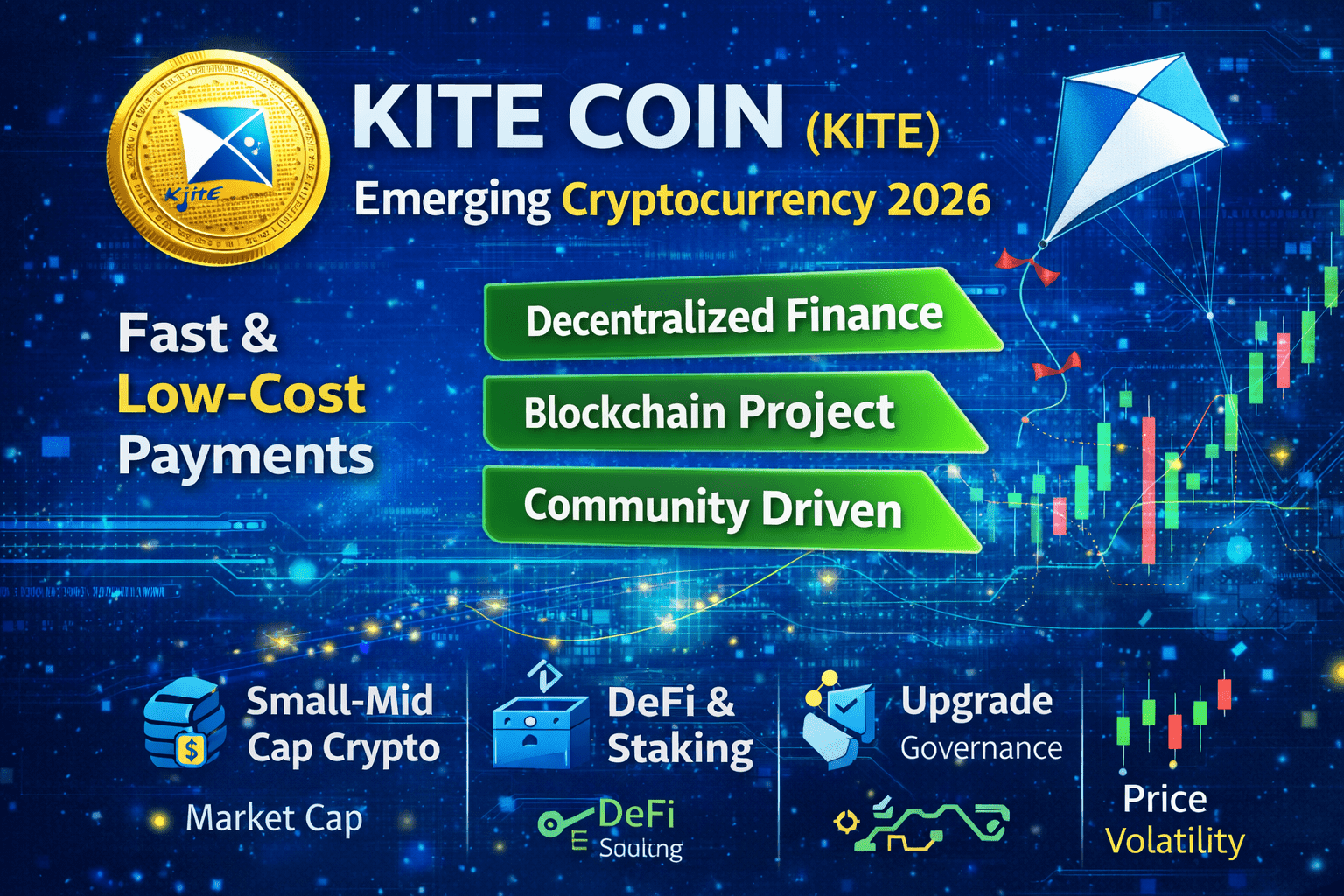
Kite Coin (KITE) is an emerging digital asset that is gaining attention in the crypto community for its focus on decentralized finance, fast transactions, and community-driven development. In 2026, Kite Coin is still considered a small to mid-cap cryptocurrency, but it shows potential due to increasing adoption and ecosystem expansion.
This article explains:
• What Kite Coin is
• How the project works
• Use cases
• Market performance
• Growth factors
• Risks
• Future outlook
🏢 What Is Kite Coin?
Kite Coin is a blockchain-based cryptocurrency designed to support fast, low-cost, and decentralized transactions. The project aims to provide users with an easy way to transfer value, participate in DeFi platforms, and access digital services without relying on traditional banks.
KITE operates on a smart-contract-enabled blockchain, allowing developers to build applications on top of its network.
The project focuses on:
- Speed and low transaction fees
- Community governance
- Decentralized applications (dApps)
- Financial inclusion
⚙️ How Kite Coin Works
Kite Coin uses blockchain technology to record transactions securely and transparently. All transfers are verified by network participants and stored on a distributed ledger.
Key technical features include:
✔ Smart contracts
✔ Wallet integration
✔ Decentralized validation
✔ Token-based governance
✔ Compatibility with DeFi platforms
Users can store KITE in crypto wallets, send it globally, and use it in supported platforms.
💼 Main Use Cases of Kite Coin
1️⃣ Digital Payments
KITE can be used for fast peer-to-peer payments with low fees, making it suitable for international transfers.
2️⃣ DeFi & Staking
Some platforms allow users to stake Kite Coin to earn rewards and participate in liquidity pools.
3️⃣ Governance
Holders may vote on future upgrades and project decisions, giving the community a role in development.
4️⃣ dApp Integration
Developers can use KITE for building decentralized apps in finance, gaming, and digital services.
📈 Market Performance & Adoption
As a developing crypto asset, Kite Coin has experienced:
• Price volatility
• Periodic trading spikes
• Growing exchange listings
• Increasing wallet holders
Its market value depends heavily on:
- Community support
- Platform partnerships
- Development progress
- Overall crypto market conditions
Like many emerging tokens, KITE can rise quickly during bull markets and fall sharply during downturns.
🚀 Why Kite Coin Could Grow
🧠 Strong Community
Community-driven projects often grow faster due to user participation and promotion.
🔄 Ecosystem Expansion
If more DeFi apps and services adopt KITE, demand may increase.
📱 Real-World Utility
Payment and staking use cases improve long-term sustainability.
🌍 Crypto Adoption
As global crypto usage grows, smaller projects like Kite Coin may benefit.
⚠️ Risks & Challenges
Before investing, it is important to understand the risks:
• Limited brand recognition
• Smaller development team
• Lower liquidity than major coins
• High price volatility
• Competition from larger blockchain projects
New investors should be cautious and avoid investing more than they can afford to lose.
🔮 Future Outlook for Kite Coin
In 2026 and beyond, Kite Coin’s success will depend on:
✔ Continuous development
✔ Strong partnerships
✔ Exchange expansion
✔ Security improvements
✔ Community engagement
If the project delivers on its roadmap and gains wider adoption, KITE could grow steadily. However, failure to innovate may limit its progress.
📌 Final Summary
Kite Coin is an emerging cryptocurrency focused on fast payments, DeFi integration, and community governance. While it does not yet compete with top-tier coins, it offers potential for long-term growth if adoption increases.
Key strengths:
- Low fees
- Decentralized structure
- Growing ecosystem
Main risks:
- Market volatility
- Limited exposure
- Strong competition
Kite Coin is best suited for investors who understand crypto risks and are interested in early-stage blockchain projects.