 Arsalan Shaikh Vohra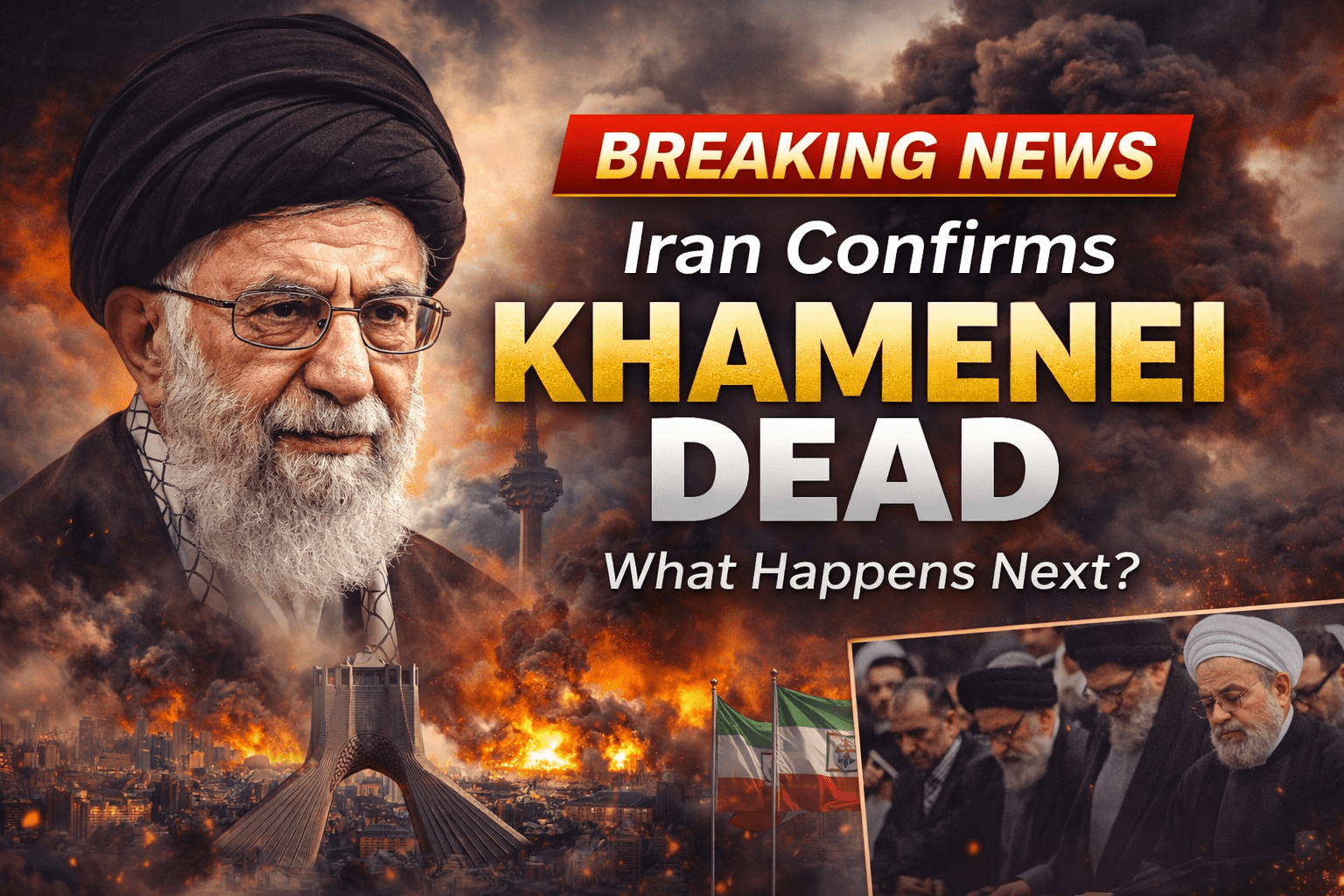
Introduction
Khamenei dead — this phrase is trending across search engines and social media after Iran officially confirmed the death of Supreme Leader Ayatollah Ali Khamenei. The announcement has triggered global reactions, political uncertainty, and serious questions about Iran’s future leadership and regional stability.
In this detailed report, we break down what happened, how Iran confirmed Khamenei dead, and what the consequences could be in the coming days.
How Iran Confirms Khamenei Dead
Iran’s state media released an official statement confirming Khamenei dead following reported military strikes near Tehran. According to early reports, the attack targeted strategic locations, including areas close to the Supreme Leader’s compound.
Shortly after the announcement that Khamenei dead, the government declared national mourning and increased security across major cities.
The confirmation that Khamenei dead marks one of the most significant political developments in Iran in decades.
Timeline After Khamenei Dead Announcement
Initial Strike Reports
Explosions were reported near sensitive government zones in Tehran. Military sources initially remained silent.
Official Confirmation
Hours later, Iranian state television officially announced Khamenei dead and declared a 40-day mourning period.
Regional Military Alerts
Following news that Khamenei dead, regional forces increased alert levels amid fears of escalation.
Why Khamenei Dead Is a Major Turning Point
The confirmation that Khamenei dead changes Iran’s political landscape immediately.
For decades, he was the highest authority in Iran’s political and military system. Now, power transition becomes the most critical issue.
When Khamenei dead news broke, analysts highlighted three major concerns:
- Leadership succession uncertainty
- Risk of regional military escalation
- Internal political instability
What Happens Next After Khamenei Dead?
With Khamenei dead, Iran must begin a constitutional process to appoint a new Supreme Leader.
Possible scenarios include:
1. Rapid Successor Appointment
To prevent instability after Khamenei dead, authorities may move quickly to select a new leader.
2. Power Struggle
If factions disagree after Khamenei dead, internal political tension could rise.
3. Regional Escalation
Following confirmation that Khamenei dead, neighboring countries are closely monitoring military developments.
Global Reaction After Khamenei Dead
International leaders responded cautiously after Iran confirmed Khamenei dead.
Some governments urged restraint to avoid wider conflict. Others emphasized diplomatic engagement to prevent escalation.
Energy markets reacted immediately to the Khamenei dead news, with oil prices showing volatility amid geopolitical uncertainty.
Market and Economic Impact of Khamenei Dead
The phrase Khamenei dead has dominated financial headlines because geopolitical instability often impacts:
- Oil prices
- Global stock markets
- Currency markets
- Regional trade routes
Any instability following Khamenei dead could influence global markets in the short term.
Political Future of Iran After Khamenei Dead
The biggest question now is leadership transition.
The Assembly of Experts is expected to convene following Khamenei dead to determine succession. Political analysts believe the coming weeks will be crucial in shaping Iran’s direction.
If the transition remains stable after Khamenei dead, the country may avoid deeper crisis. However, uncertainty remains high.
Conclusion: What Khamenei Dead Means for the World
Iran confirms Khamenei dead — a historic and potentially destabilizing event.
The long-term outcome depends on:
- How smoothly succession occurs
- Whether regional tensions escalate
- How global powers respond
For now, the confirmation that Khamenei dead has entered history as a defining geopolitical moment.
