 Arsalan Shaikh Vohra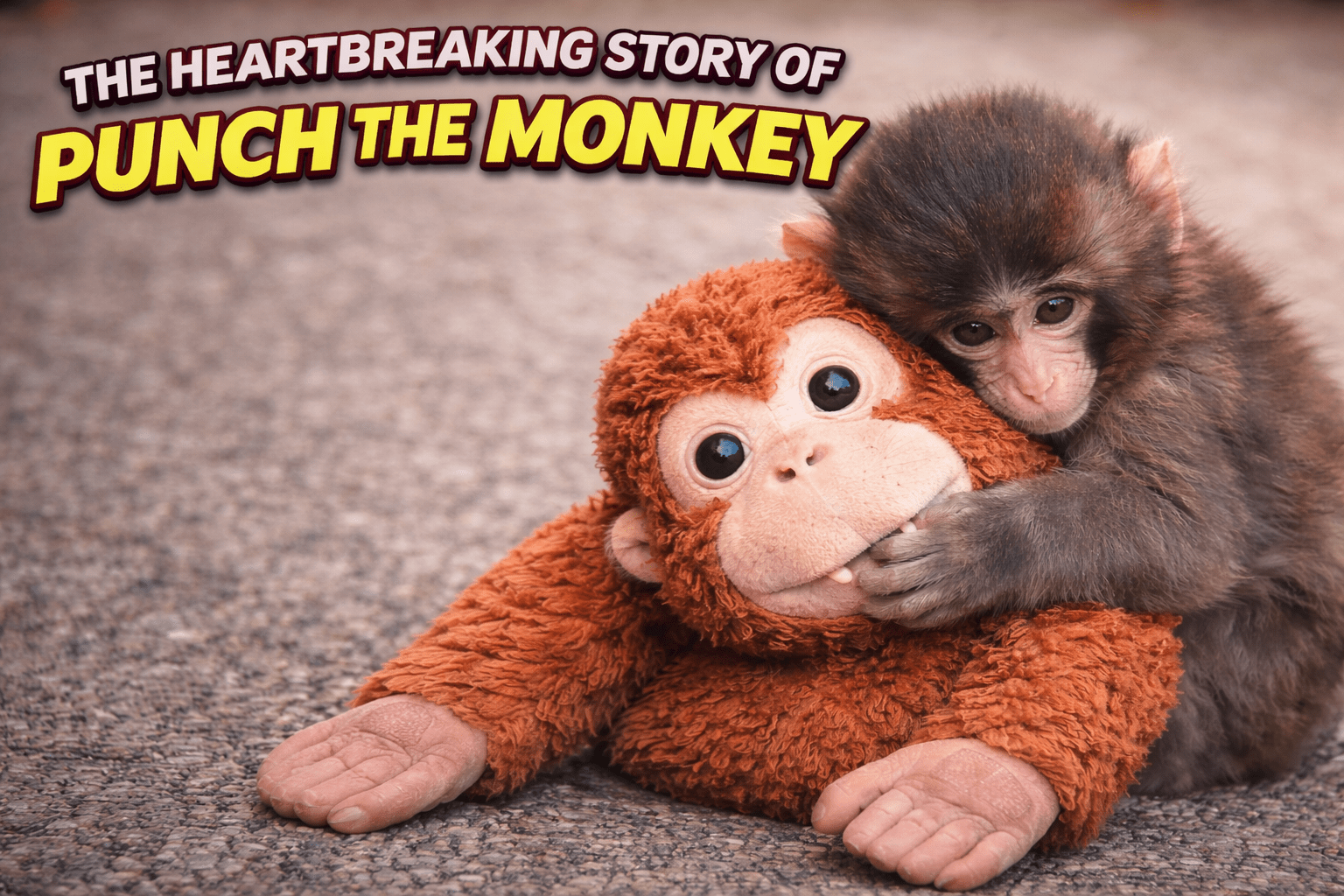
First, a quick clarification—because the internet title is confusing: “Punch the monkey” is not a call to hit a monkey. Punch is the name of a baby Japanese macaque whose story has gone viral worldwide after he was rejected by his mother and later bonded with a stuffed orangutan toy at a zoo in Japan.
And that’s exactly why people can’t stop watching.
Because behind the memes and short clips, this is not a “funny monkey video.” It’s a story about what it looks like when a newborn is left behind—and how fragile survival can be when love and protection don’t come automatically.
A Baby Born… Then Left Alone
Punch was born in Japan at Ichikawa City Zoo (Ichikawa, Chiba). Reports say he was born in late July 2025.
Normally, newborn macaques cling to their mothers constantly. A baby’s whole world is warm fur, milk, heartbeat, and safety. That bond is everything—food, comfort, learning, protection, and identity in the group.
But Punch didn’t get that.
Not long after birth, he was rejected by his mother, and the zoo staff had to step in and hand-rear him.
And if you’ve ever seen a baby animal separated from its mother, you already know the feeling: it doesn’t look like drama. It looks like confusion. Like waiting. Like the baby is expecting something that never arrives.
Hand-Raised by Humans… But Missing Something Humans Can’t Replace
The staff did what they could—feeding him, keeping him alive, giving him routine. But hand-raising an animal doesn’t automatically replace what a mother teaches in a troop:
how to approach adults, how to read warnings, when to submit, how to play, how to belong.
That missing “social map” becomes a problem later, because macaques aren’t solo animals. They’re born into a hierarchy. They survive inside a system. And if you don’t learn the rules early, the troop can feel like a harsh world.
So even when Punch was physically safe, emotionally and socially, he was still… alone.
The Plush Toy That Became His “Safe Place”
This is the part that made the whole internet stop scrolling.
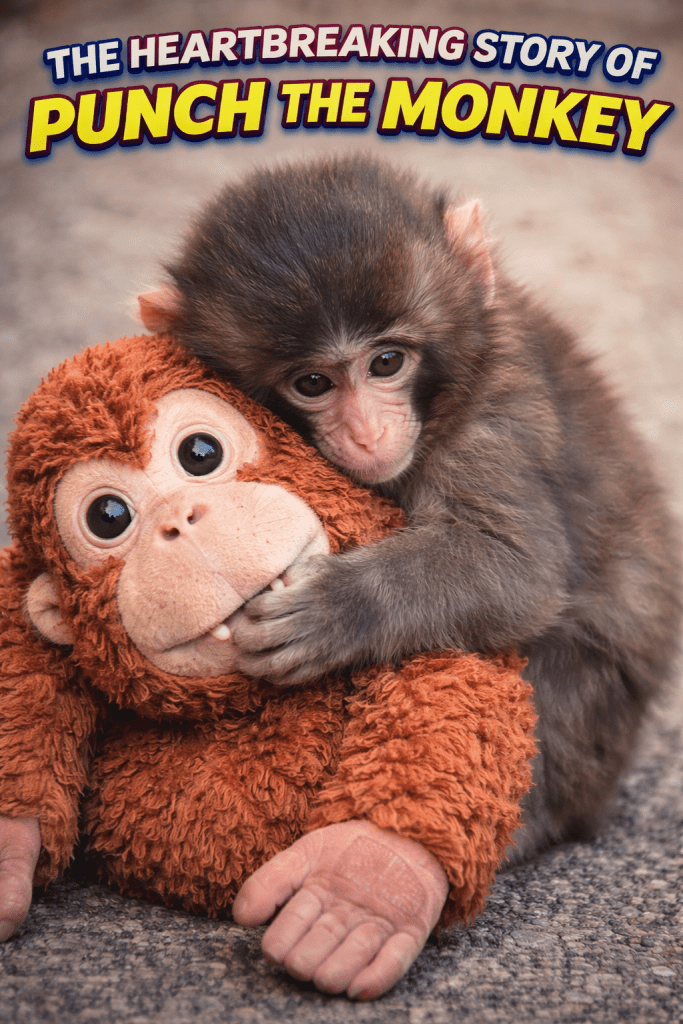
Punch was given a stuffed orangutan toy, and he began carrying it around like it was more than a toy—like it was an anchor. Videos show him clinging to it, dragging it, running back to it when he feels overwhelmed.
It’s hard not to humanize that moment—because it looks exactly like what it is: a small being trying to create comfort when comfort wasn’t naturally available.
Some reports identify the plush as an IKEA-style orangutan toy that keepers used to help him cope and self-soothe.
And honestly, that’s why the story hits so hard. Not because it’s cute (it is), but because it’s recognizable.
You can see the need in the way he holds it.
“The Video” Everyone Is Talking About
Then came the clips that triggered massive debate: Punch interacting with other macaques—being pulled, chased, or seemingly bullied.
People watched it and felt sick. Comment sections filled up fast:
- “Why is nobody helping him?”
- “This is cruel.”
- “Get him out of there.”
But the zoo and multiple reports described those moments as part of troop integration—the rough, uncomfortable process where young or socially awkward macaques learn boundaries and hierarchy.
That explanation doesn’t instantly make the footage easy to watch. It just adds reality: in social animal groups, “discipline” isn’t polite. It can look brutal—especially when you’re watching a baby you already feel protective toward.
So the internet split into two emotions at the same time:
- Protect him.
- Let him learn to belong.
Both feelings can be true. That’s the heartbreak of it.
Why Would a Mother Reject Her Baby?
This is the question that turned Punch’s story from viral content into a bigger conversation.
Animals reject offspring for reasons that can be harsh but biological:
- extreme stress during birth
- illness or weakness (sometimes perceived)
- lack of experience (first-time mothers)
- environmental pressure (heat, lack of resources, disturbance)
Some reporting around Punch’s case discussed how difficult conditions and maternal stress can influence abandonment.
It’s not “evil.” It’s not “hate.”
It’s nature under pressure—sometimes cold, sometimes confusing, and often painful to witness.
And that’s why Punch became a symbol online: he’s not just one monkey. He’s a reminder that even in nature, not every birth comes with a happy beginning.
The Hardest Part: Belonging
Here’s the emotional core of this entire story:
Punch doesn’t just need food.
Punch needs acceptance.
In macaque society, acceptance isn’t given. It’s learned. It’s negotiated. It’s earned through signals, through time, through submission, through bonding.
And Punch is trying to do that while carrying two invisible weights:
- He didn’t grow up under a mother’s protection in the troop
- The whole world is watching him like he’s a character in a movie
Some reports note that Punch has gradually been interacting more and learning social cues as time goes on.
That matters. Because it means he’s not frozen in that first tragedy. He’s moving forward.
Slowly, awkwardly, bravely.
Why This Story Makes People Cry (Even If They Don’t Admit It)
Because it taps into something very human:
The fear of being unwanted.
The fear of being left behind at the beginning.
The need to hold onto something when the world feels too big.
That plush toy isn’t just a toy in the way people usually mean it. It has become a stand-in for:
- safety
- attachment
- comfort
- routine
- “I’m not alone”
And for people watching, it becomes a mirror:
“Look how small he is… and he’s still trying.”
A Note on Zoos and the Debate
It’s also fair to say: Punch’s viral fame has increased attention on the zoo—and also brought criticism from animal welfare voices.
Some animal advocacy groups argue that viral zoo moments can hide bigger welfare issues, while zoos often respond that social integration is necessary for long-term well-being in group animals.
If you’re reading this and feeling torn, that’s normal. The story sits right on that uncomfortable line between:
- nature being harsh
- humans wanting to protect
- institutions trying to manage animal social reality
Your Turn (Comments Question)
When you watched Punch holding onto that plush—what did you feel?
- Do you think the troop should be allowed to “teach him” naturally?
- Or should humans protect him more aggressively?
- And if you were the caretaker—what would you do differently?
Write your thoughts in the comments. People don’t just relate to Punch because he’s a monkey. People relate to Punch because the feeling of being left out… is universal.
